
Where do you start?
They at least know about using an organiser rather than their mobile phone, that is a great start.
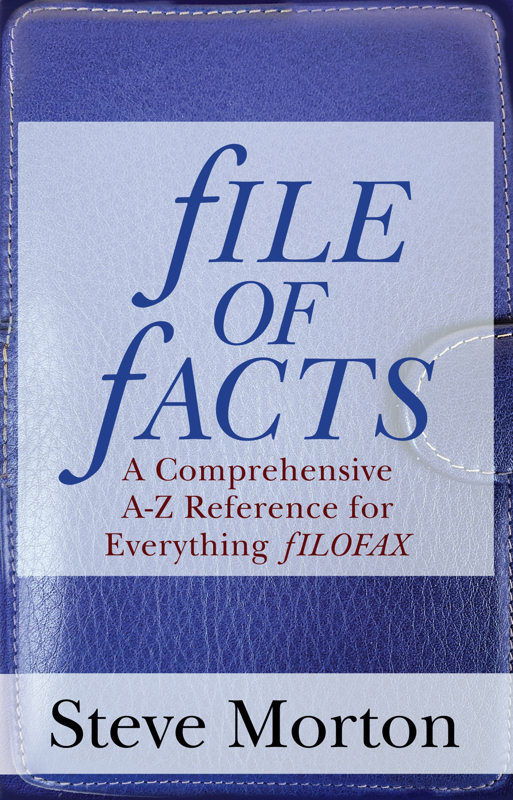
Send them to https://philofaxy.com yes good advice of course, but the huge amount of information might scare them off. Buy them a copy, or lend them your copy of 'File of Facts' a sound bit of advice!
We therefore need a 'Beginners Guide' or 'Getting Started with a Filofax'
What Size of Filofax?
Choosing the right Filofax size is all about balancing portability and functionality—here’s how to decide:
1. Consider Your Daily Carry
Do you carry a bag every day?
- Yes: You can go for a larger size (A5, A4).
- No (or only a small bag/pocket): Stick to compact sizes (Mini, Pocket, Personal, Slimline).
2. Think About Your Writing Space
Do you need lots of room to write?
- Yes: A5 or A4 offers more space for notes, lists, and detailed planning.
- No: Personal or Pocket is plenty for most people.
3. Assess Your Planning Style
Minimalist (just dates, to-dos, contacts):
- Mini (fits even the smallest of pockets)
- Pocket (fits in a pocket, very portable)
- Slimline (thinner, lighter, but still functional)
Detailed (lots of notes, projects, inserts):
- Personal (most popular, balances size and space)
- A5 (ideal for heavy users, more writing room)
Maximalist (everything in one place, big projects):
- A4 (desk-sized, not portable but great for reference)
4. Test the Size
- Visit a store (if possible) to see the sizes in person.
- Compare to familiar items:
- Mini: Similar to the size of a pack of playing cards, just slightly taller.
- Pocket: Similar to a large smartphone.
- Personal: Slightly larger than a paperback book.
- A5: About the size of a standard notebook.
- A4: Like a sheet of printer paper.
5. Think About Inserts
Do you want to use custom inserts or dashboards?
- Some sizes (like Personal and A5) have more insert options available.
- Pocket and Slimline have fewer choices but are great for simplicity.
6. Portability vs. Functionality
- If you’ll leave it at home/desk: A5 or A4.
- If you want it with you always: Personal, Pocket, or Slimline.
7. Start Small
- If you’re unsure, Personal is the most versatile and widely recommended for beginners.
- You can always upgrade or down size later as your needs change.
Quick Guide:
| Size | Best For | Portability | Writing Space | Insert Variety |
| Mini | Minimalists, on-the-go | ★★★★★ | ★ | ★ |
| Minimalists, on-the-go | ★★★★★ | ★★ | ★★ | |
| Slimline | Light users, small bags | ★★★★★ | ★★★ | ★★★★ |
| Personal | Most people, balanced use | ★★★★ | ★★★★ | ★★★★★ |
| A5 | Heavy planners, detailed notes | ★★ | ★★★★★ | ★★★★ |
| A4 | Desk reference, big projects | ★ | ★★★★★ | ★★★★ |
Final Tip: Ask yourself: "Where will I use this most?"
- If it’s in your bag or pocket, go smaller.
- If it’s on your desk, go bigger.
What inserts to buy for your Filofax?
Sometimes the inserts will dictate what size of Filofax to buy, so this needs to be taken in to account as well as all of the points above. A bit of a 'chicken and egg' situation.
- Firstly get some ordinary copier paper and cut it to the sizes of the pages in a Filofax such as A5, Personal, Pocket.
- Create several pages in each size.
- Write in your own handwriting a typical day/week of appointments and tasks on to the sheets in each size mimicking a daily, weekly diary format.
- Do this for each size.
- Assess how 'busy' each page/size looks, too much white space, not enough space.
- Which diary format suits your needs best in terms of seeing all of your future and immediate past days?
- Remember a Filofax doesn't have to only be used for diary/planning activities, they can be used for a host of other uses.
- The versatility of a Filofax in that you can change the pages and change their order, means that it can adapt an infinite number of ways to meet your needs.
This is very good, and well thought out. I like the idea of a beginners guide!
ReplyDeleteI am wondering about your point one, people who carry bags all day may still better avoiding A5 or A4 (if they want to carry a filofax with them all day) unless they are ok with shoulder, neck, and back pain (personal experience) . If they are only taking the bag a metre to a car and a metre from the car maybe it is doable, but if they walk and/or use public transport to get anywhere and want to have a FIlofax with them I would be advising the lightest and smallest that still can cater for their info and planning needs. I think for beginner advice A5 and A4 binders are best for desk top set ups not for carrying around even if you do carry a bag/backpack. Lugging heavy binders around is not fun (again personal experience) .
Great topic though and really useful content for those interested in getting/setting up a Filofax.
With A4, the Filofax can be what you carry - no need for a bag.
DeleteI have an A4 Graphic ZIP with a carrying handle at the spine. There's even room for a 14" Computer Notebook. However, with the Spine-Handle variant you'd have to trust the zipper to hold your Notebook. A Spine-Down variant is more safe in this context, but requires two handles.
Hans
Regarding writing space: Take a piece of paper, cut it to the respective size, don't forget to mark the punching margin of about 6-10mm, then try out the available space.
ReplyDeleteFor most people, the remaining width of the Personal format looks shockingly narrow. That's mostly because it leaves an unusual 2:1 aspect writing area. If you think about downsizing to Pocket, you get 14mm less width, although it looks more pleaing in terms of aspect ratio. Upsizing to A5 would be a huge increase. That's the classic Filofax size dliemma.
Hans
Excellent advice and explained really well
ReplyDeleteAnother point worth mentioning: There's a "natural" greed for ring size. People tend to decide for the larger ring size, if there is a choice. Why should it be wrong to have more space than required?
ReplyDeleteOf course you can use only a few sheets in large rings - unlike with discbound, where a certain fill level is required to make it work. However, ring size adds up to thickness, width, and especially full-open width. My suggestion would be to keep the ring size as small as possible/reasonable.
Hans
0 What Do You Want To Use A Ring Binder For?
ReplyDeleteI think the Beginner's Guide should probably start there. Everything else follows.
Inserts: Slimline inserts are Personal size, so the full range of Personal inserts is available.
ReplyDeleteHere's my beginners' guide: "Get a Personal 23 mm with a one-week-on-two-pages diary and extra lined pages. Write your appointments, your to-dos, your shopping lists, anything else you need to remember. Write in it every day."
ReplyDeleteDon't encourage beginners to agonize over their choice of first organizer and first refill. Just give them the option that's most likely to be "just right". If it turns out to be too small or too big for their needs, well, that can be fixed with a different refill or different organizer. Take the most important step first and worry about the small stuff later.
This is great info to get back to planning on paper. Thank you for the tips and all the great forms here. Having a good set up right from the start will help stick to it.
ReplyDelete