Showing posts with label Books. Show all posts

08 December 2023

Free For All Friday No 787 by Laurie

I'm currently reading The Notebook: A History of Thinking on Paper. I'm really enjoying learning about the origins of the paper notebook, and different ways people have used them over the centuries. 

The majority of the book is dedicated to undated notebooks, but there is a chapter acknowledging dated diary products, their origin (Letts) and how they quickly grew in popularity. At the end of that chapter, there is a footnote about Filofax organisers. 

The footnote gives a very brief summary of the origin of Filofax organisers, and their popularity in the 80's and 90's as "a classic yuppie accessory." The short paragraph ends saying:

"Its core market of professionals, inevitably, transitioned to digital devices, but the Filofax has found a new audience among a generation of journal-keepers who treat it more like a scrapbook."

At first I took mild offense to what seemed to me minimising the role of Filofax among its current users. I can understand why he would write that, since many of the images on social media are of Filofax rings bursting with pages of photos, inspirational quotes, notes and memory-keeping.

But I think Filofax organisers are much more than any one thing, as they always have been. I think it is a testament to users' love of ring organisers for their flexibility and creative potential that Filofax survived the digital age and the downturn in the use of paper planners about 14 or so years ago. 

At that time there was talk about the dying out of paper planners. They have come back, maybe not entirely in the simple role of planning meetings and appointments, but certainly as a way for us to organise our lives however we see fit.

As always on Fridays, feel free to ask and/ or discuss anything ring-binder organiser related!

20 June 2022

Reading


During the extremely hot weather we have been having here in South West France these last few days, I've been catching up with some reading. 

Going outside even just to check for post was quite exhausting. Whilst it was 40 degrees outside I was keeping cool and calm indoors at temperatures no higher than 27 degrees, drinking plenty of plain water!. 

I'm not a very fast reader, but I do enjoy a good crime novel. I've read my wife's first crime thriller Double Identity which was very good (she wasn't standing over my shoulder while I wrote that!!) 

I'm also a big fan of Michael Connelly and his books about Harry Bosch and LAPD Homicide Detective and also Mickey Haller a defence attorney. 

It was his books I needed to sort out, they have been written over a long period of time since 1992, and his Wikipedia Page has a detailed chart of the books when they were published and the characters in them. What I didn't know was, have I read them all, and in what order! 

Now I know that there is bound to be 'an app for that' in my case it was 'I'm sure I have a template file for that

Of course we do... here!

A5 Templates:
Personal Templates:
I printed off a few these sheets for A5 and started on checking off the books. Fortunately I only discovered a couple I've missed off my reading journey which I will add to my Kindle in due course. 

What books have you read recently? 

03 January 2022

fILE OF fACTS launches!


Today’s the day! 

Yes, it's flying out into the world at last. 

As a man from the north of England, I don't do wild excessive shouting and screaming, but I have done a happy dance around my desk. 

I've known the world of organisers and planner for many years. Like many people at the time, I started off with a Filofax and it's probably the brand that the general public has heard of. Of course, we all know the organiser world is bigger than that... 

Why did I write it? I wanted to give something back to the community where I've found such warm and enduring friendship. 

The whole editing, formatting and publishing process has been handled by my novel-writing wife, Alison, but I've been overwhelmed by the numbers of pre-orders she's been reporting to me everyday. 

If you've ordered in advance, especially for the ebook, I want to say a big 'thank you' for the faith you have in me. 

So, what's fILE OF fACTS about? Filofax is the great survivor that's turned into turned an indispensable cult
  • But how do you choose the size and the inserts from so many on offer?
  • How do you select the design to work best for you?
  • How does your Filofax fit into and enhance your life?
Whether you’re thinking of getting your first Filofax organiser, have just bought it or are a long-term user, this guide will help you get the best out of it, from the basics to the clever stuff.
  • Easy A-Z format
  • In-depth review of different designs (and their quirks!)
  • Secret features users might not suspect exist
  • Timeline of Filofax’s history through the last 100 years
  • Introduction to other leading manufacturers of organisers (Gillio, Van Der Spek)
Several years of pain, fun and experience are brought together in one book which will suit both new and established users.   

I hope you enjoy fILE OF fACTS. I loved writing it! When you’ve finished the book, I’d really appreciate it if you would post a few words of review on the site where you bought it. Reviews really help a book become more visible and I’d love more readers to get to know the world of organisers and planners in depth. 

Where can you buy it? 

Paperback:  Amazon UK   Amazon US   Barnes &Noble  Book Depository  Waterstones and through your local bookshop 

fILE OF fACTS: A Comprehensive A-Z Reference for Everything fILOFAX 
Publication by Pulcheria Press 3 January 2022 
Ebook: ISBN 9791097310332 
Paperback: ISBN 9791097310325

13 December 2021

File of Facts -- Now available for pre-order!


Yes, you can now pre-order the ebook of fILE OF fACTS

It’s available on Amazon (Kindle), Apple, Kobo, Barnes & Noble NookUniversal eBook Link

What’s fILE OF fACTS about?

Here’s the ‘official’ description…

Filofax is the great survivor, now turned indispensable cult
  • But how do you choose the size and the inserts from so many on offer?
  • How do you select the design to work best for you?
  • How does your Filofax fit into and enhance your life?
Whether you’re thinking of getting your first Filofax organiser, have just bought it or are a long-term user, this guide will help you get the best out of it, from the basics to the clever stuff.
  • Easy A-Z format
  • In-depth review of different designs (and their quirks!)
  • Secret features users might not suspect exist 
  • Timeline of Filofax’s history through the last 100 years
  • Introduction to other leading manufacturers of organisers (Gillio, Van Der Spek)
__________ 

It’s been a little while in the making, but as they say, ‘my friends have persuaded me to step up’ and get on with it. Several years of pain, fun and experience are brought together in this one book. I’m an engineer by trade, so I’ve aimed to set it out in a logical and practical fashion.

My wife, Alison, who has written and published more thrillers than I can remember, has edited and formatted my original text ready for publication through Pulcheria Press and Cathy Helms of Avalon Graphics designed the great cover.

What happens now?

You can pre-order the ebook version today and it will slide onto your ereader on publication date 3 January 2022.

Amazon (Kindle)AppleKoboBarnes & Noble NookUniversal eBook Link

The paperback version will start to appear on some retailer sites during December, but will be fully available from publication date on 3 January 2022 to order through your local bookshop or online from Amazon, Barnes & Noble, Waterstone, Book Depository, etc.

fILE OF fACTS by Steve Morton
Published by Pulcheria Press 3 January 2022

Ebook: ISBN 9791097310332
Paperback: ISBN 9791097310325


05 December 2021

Coming soon – the ultimate guide to Filofax!


Today, I’m thrilled to reveal the cover for the ebook of my new book – fILE OF fACTS: A Comprehensive A-Z Reference for Everything fILOFAX.

It will include how to choose size and inserts, the best design to fit your life plus hints and tips, a timeline and a few little secrets!

Several years of pain, fun and experience are brought together in one book which will suit both new and established users, plus cover everything from the basics to some really clever stuff!

fILE OF fACTS will be published in early January in both ebook and paperback versions.

More about it within the next ten days, including how to pre-order an ebook version!

25 July 2019

Books and Other Resources

There are many books and other resources available about organisation and time management. I only have a relatively small selection of books, and I'm as yet to read some of them.

Quite ironic isn't it.... I can not find time to read about time management!! But that's life I guess!

Anyway here are my physical books, I will also include in the list some I have on my Kindle as well.


Here are the books listed with affiliate links to Amazon UK.

Some of the books listed are now Out of Print, but are available used from sellers.

There are some great on-line resources too which I've collected over the years.
Blog posts are another great source of inspiration too, here are just a few I recently read:


21 March 2019

Reading Lists

Books, I love to read them, but can I remember which ones I've read, and if I'm reading a series have I read them in the correct order?

If you know me well enough then the answer is no... to both questions! Poor memory or just too much going on in life you decide!

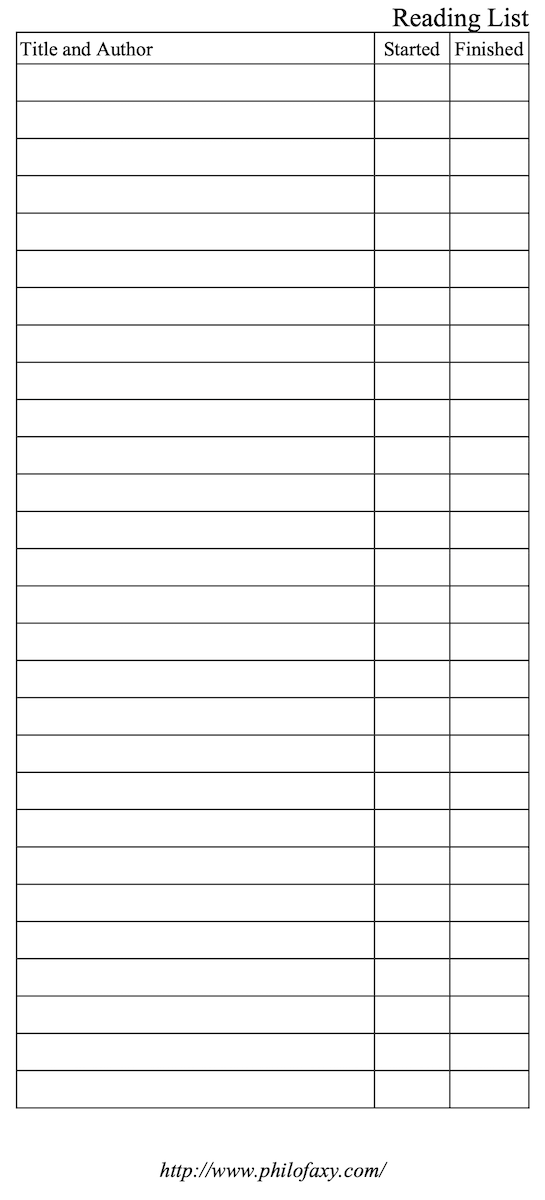
This is where my organiser comes to the rescue!  I have some simple templates that I can write in the book titles I've read so far. In the case of a series I write them in to the list in the correct order and then I can enter the dates I read them or simply tick them off as I go through them.

You can find the templates I use here:
Alternatively I've adapted an existing 'To-do' list into a reading list or books to read list. Will there be enough time to read them all is another matter!

You will of course find my dear wife's books here! I'm sure she will welcome a few more fans! 

Happy reading.... 

12 May 2016

Books about organising and time management


I was looking for a book the other day (I didn't find it!) and I gathered together all the books I have on time management and organisation that I have collected over the years and I thought I would share the details with you all.

Quite a few of them are 'out of print' now but they do appear on Amazon Market Place from time to time.
  • Filofax Facts - Ian Sinclair - This dates from 1988 and I have reviewed it before on the blog. It has a lot of details and 'pictures' of lots of the old inserts that are no longer available these days. 
  • Getting Things Done - David Allen - The original edition came out in 2001 and according to David Popely who reviewed the 2nd revision, the original version is much better than the latest version. 
  • The Advanced Day Planner User's Guide - Hyrum W. Smith - This book was originally published in 1987 and it is focused on Franklin Covey planner users, but there are lots of tips for all planner users. We have reviewed this a couple of times, here and here.
  • Managing Time Loving Every Minute - Peter Green - This book was used on the Filofax Time Management training courses, originally published 1999 with a second revision coming out in 2004. If you buy a second hand copy try to get one which hasn't been written in. 
  • 'A' Time - The busy manager's action plan for effective self management - James Noon - Tim did an excellent guest post about the author James Noon, a quick read of that post will give you a better idea if this book is for you. This is another book that has lots of self assessment work sheets in it so it is essential to get an 'as new' copy if you can. James has his own website too
  • Zen To Done - Leo Babauta - This is a variation on Getting Things Done,  I found the concepts easier to understand, but that might tell you more about me than about the book! The authors own website has a lot of details, worth a visit.
  • Journalling School: A Short Course in Personal Journalling - Ray Blake  - Not a book about organisation as such but an excellent book on journalling and how to improve your journalling skills. 
Do you have any favourite books on this topic I've not mentioned?

Amazon UK links:


Amazon USA links:

08 April 2015

Guest Post - Getting Things Done by David Allen – a review of the second edition - David Popely

Thank you to David for this review, I've only just started reading this myself. I never got to read the original!


This a review I really didn’t expect to be writing, not because of the subject matter but because of my experience of GTD as ‘boiled down’ and encapsulated by the revised edition of the book, which as many of you will know, was published last month.

If you wanted to read a 100% and unreservedly positive review of the book, you can find one at
http://alifeofproductivity.com/david-allens-revised-getting-things-done-book-comes-out-today/
…and there are many others. This is both a review of the new (second) edition of the book, and also a review of GTD as well, written by someone who has used it for 2-3 years.

First, a word about the book itself. I downloaded a copy to my Kindle on the morning of publication (the paper copy not being available until some days later, for unknown reasons), immediately prior to departure for London by train, and looking forward to making a start on reading it during the 5 hours of train time these return trips give me.

Unfortunately, publishers Piatkus have done a really bad job on the book. The dreadful inset text boxes, which exist only to break up the flow of the main text and add nothing to the main message, are still in place from the first edition, but because the book has basically been ‘dumped’ into ebook format, they often extend off the bottom of the Kindle screen, while the main text continues to do so as well, making comprehension difficult at best, and mostly just impossible. I gave up on the Kindle edition after about half an hour and decided to go looking for the (at that stage non-existent) paper edition.

Secondly, a well-known publisher like Piatkus really ought to have had the book properly proof-read before publication. There are important changes to the GTD process stage names in the second edition which just aren’t reflected in the accompanying diagrams and graphics, which are retained in their first edition form.

So far, so bad. 2/10 and ‘must try harder’ for the publishers.

Eventually I managed to get hold of a hard copy of the book via Amazon, all attempts to get one from a bookshop, local or otherwise, having failed.

Turning to the text of the book itself, it has billed as a complete rewrite of the original, yet it’s more of a re-type than a rewrite, which is how David Allen describes the process he used to produce the second edition. Yes, there are changes to the core process terms used (although the core process remains unchanged), and the book has if anything, been revised to make it even more what David Allen refers to as ‘platform agnostic’, reinforcing the central idea that GTD is more a set of organising processes than advocating a specific set of software, apps or organising equipment. This is probably a very canny idea as technology continues to drive change in practice, but Filofax fans will take heart from this, as did I.

Yes, you can run GTD using anything from a tablet/phone/laptop or any combination of the three, down to a notepad and pen. Allen is very generous towards paper system users, and freely admits (in the book and elsewhere) that many of the most committed GTD users are also paper users – this despite the fact that GTD forums everywhere have been almost entirely commandeered and taken over by the ‘which app is best?’ brigade.

There are two brand new chapters at the end of the book, one on GTD and neuroscience, which I found fascinating (although it rather reads as a justification for using any system of planning rather than none, as opposed to a compliment to GTD itself), and another pointing towards potential ‘higher levels’ of expertise in the GTD methodology….pointer to a new book to come, maybe?

So why, having been a GTD user for a few years, am I left feeling that I now want to move away, back towards other ‘organisational methods’?

From the very beginning of my GTD experience I’ve been convinced that GTD is a great system – possibly the best ever system yet, for capturing and dealing with ‘stuff’ as it comes towards us in our daily lives. However, I’ve always been dissatisfied with the lack of emphasis on proactive planning as opposed to reactive coping. I have always suspected that Allen’s later book, Making it All Work, is on some ways a tacit attempt to address this, and there is far more in the later book about what Allen refers to as ‘Horizons of Focus’. Personally I find the whole ‘Horizons of Focus’ concept too ethereal and ‘hard to pin done’ to be of much use.

Also, the GTD ‘method’ of keeping tasks off daily plans is something which just doesn’t work for me. Like many people I have spoken to, I found that I have to be able ‘see’ my whole day at a view (appointments, calls, tasks, ticklers), otherwise things don’t get done. If tasks are hidden on lists at the ‘back’ of the system, they don’t come to mind.

GTD presents itself as a deliberately ‘bottom’ up’ system, and the rationale Allen presents for that is that it’s impossible to focus on our own agendas when we are still being chaotically bombarded by ‘stuff’ coming from outside. However, as someone who has always thought that planning is the art and science of capturing time, in advance, for our own goals and priorities, I don’t find the approach of deciding what to do ‘in the moment’ very helpful….it leads to my time being away by others, in the direction of *their* agendas, rather than being used first for my priorities and secondly for those of people around me. I’m all for having a list of ‘small tasks’ which can be done in odd moments of time (the sort of odd moments I often find myself with between meetings when I’m travelling), but most of my tasks need to be allocated to specific days, some (following James Noon’s excellent system) to specific time slots, way in advance of their due date, if last minute panic is going to be avoided. To me, GTD is a great way of organising, but as a method of planning it doesn’t work.
I was really hoping this would be addressed in the second edition of the book, but not only is any balance lacking, there is yet more justification for the ‘bottom up’ approach.

Many people find GTD a very helpful approach, and I think they will enjoy this updated, modernised re-issue greatly. However, GTD isn’t for everyone, and on further reflection I feel that it probably isn’t for me – at least not in its unmodified, ‘out of the box’ state. Despite the obvious neglect shown by the publishers in the actual publishing process, I don’t think this is a bad book. Rather, I think it’s a good book about a world-renowned system of organisation (I now hesitate to use the word ‘planning’), which many will find helpful. If you enjoyed the first edition of the book, the second edition is well worth reading to update yourself. If you didn’t read the first edition, the second edition is still worth reading, but please – read the book, not just the reviews! If, like me, you had reservations about the system expounded in the first edition, I’m afraid the second edition isn’t going to offer you any encouragement that they have been, or even are likely to be, addressed any time soon.


23 November 2011

Long lost Filofax notes become a published book

Whenever people see my Filofax, the usual reaction I get is 'I had one of those' to which I always reply, 'Have you still got it?'.

This normally sends them off in a bit of a tailspin and rooting through their desk to find their Filofax. While I'm drinking my coffee, they normally reappear brandishing their treasured Filofax, asking me which model it is.

Well, you're not going to believe this, but our friend, Denise, who we have been staying with in the UK this last week took one look at my A5 Malden and said not 'I had one of those', but 'I've still got one of those. I used the notes and diary to write my book about my adventures as a single English girl in Bavaria.'

I smiled and asked politely if I could see it. Then she went off to rummage through her desk while I had a beer!

What Denise then appeared with was a 1990s personal size Filofax. I've not identified it yet in terms of which model it is, but I was more interested in what this book was she'd written from the notes within her old Filofax.

I looked through her pages and pages of notes; they told an interesting story in their own right. The Filofax looks like new, but it had travelled many kilometres in her bag over the years, just like a travel companion and a friend, always there when she needed to jot down some notes.

During the writing of the book, Denise told me she frequently referred to the notes in her Filofax. When the book came back from the editors, Denise had her Filofax notes to hand to make sure the tales and her notes hadn't become distorted in the editing process. She explained the Filofax had become more than just a diary, but had built up into a precious reference book, neatly organised. If she'd lost it, she said she would have thrown herself off one of those Bavarian mountains.

The book starts off in 1973 and travels through Denise's life to about 2005 and it is a very funny read. I've not had a chance to finish it yet, but I will do over the next few weeks. As a small 'plug', the book (from Bad to Wurst by Denise Barnes) is available on Amazon in UK, US and Germany in print and Kindle formats. There is also a website, which I'm in the process of updating for her!

10 November 2011

Filofax Facts

Another two copies of Filofax Facts have become available on Amazon UK See my full review of the book.

And buy the book via the link below. This book doesn't come up for sale very often and when it does the price is often ridiculously high.

I paid £9.99 for mine in December 2010


17 July 2011

Filofax Facts

Another two copies of Filofax Facts have become available on Amazon UK See my full review of the book.

And buy the book via the link below. This book doesn't come up for sale very often and when it does the price is often ridiculously high.

I paid £9.99 for mine in December 2010


02 January 2011

Book Review - Filofax Facts - Ian Sinclair

I came across this book on Amazon, it was published in 1988, so it was written very much in the 'hey day' of Filofax that we now think of as being 'Vintage'.

Although as we know or will learn, 1988 is still fairly 'recent' in terms of the overall history of the company.  The company has of course changed hands several times in it's history which dates back to 1921.... 90 years this year..

The book is some 150 pages, published by David Fulton Publishers Ltd. ISBN 1-85346-106-7 I'm not sure how many copies were printed or sold back in 1988.

The copy I bought from a third party seller on Amazon.co.uk is in good condition, one minor crease on the back cover but otherwise like new.

The book is divided up in to the following chapters:
  • Preface
  • 1. Historical Fax
  • 2. Organising your Time
  • 3. Personal Organisation
  • 4. Doing Business.
  • 5. Communications and sales organisation
  • 6. Data organisation
  • 7. Specialised Organisation
  • 8. The Packaging
The 1st chapter covers the history of the company from 1921 through the war years until 1988, the next chapters describe the numerous page inserts that were available back in the 1980's, a lot of them I remember, although I didn't use all of them! But I will describe them in more detail later in this post. And the final chapter describes the actual organisers themselves which didn't have as many style or size options as we now have!

Reading through the book was quite an enjoyable experience for me because I was able to relate to how business was conducted back in the 1980's, dare I say... some of our younger readers will find it quite amusing, but you have to remember our only communications means back then was the telephone, fax machine, telex there wasn't any internet... although Prestel gets a mention in the books! So yes this book was very much 'my era'

However, I did pick up a few tips from the book which I will share with you in the next few days/weeks. It's going back to this era that made me realise how the company intended us to use certain refills that made me think that may be we aren't using them in quite the way that they were originally intended, so watch this space!

Inserted in to the book are also some period cartoons, for instance picture if you will two tramps walking across some waste ground in very scruffy and torn business suits, and one says to the other 'It all started when I lost my Filofax!'   

So in a little more detail about each chapter:
  1. Historical Filofax
    Details how the brand came in to existence and it's early history under the company called Norman and Hill Ltd. It includes how Grace Scurr saved the company when it's office was bombed during the war because she had all the customer records in her own Filofax that she took home every night.

    The details of what happened to the company during the war and in the years that followed up until 1988. For a more detailed and up to date history you need to read the Chronology of Filofax by Kevin Hall.
  2. Organising Your Time
    This chapter outlines the diary inserts and how they might be used. The diary inserts available in the 1980's aren't that much different to those we see today. There are a few interesting differences, there were more undated pages available back then. I will go in to more detail about how they were intended to be used in a separate post. 

    Also covered in this chapter are the various planner pages available. These included:
    • Year Planner - Horizontal format, which is limited in terms of space for each day, the days are vertically aligned to the same day of the week.
    • Year Planner - Vertical format, which has a larger space for each day to write in. Days are horizontally aligned according to the date in the month.
    • Month Planner - The sheet is in a horizontal format with a column numbered 1 - 31, and separate columns for Morning, Lunch, Afternoon and Evening, plus some blank columns for times and one for you to write in what the day of week the dates are for.
  3. Personal Organisation
    This chapter covers the following inserts:
    • Names and Address inserts in several familiar formats
    • Most used telephone numbers - a paper version of speed dial!
    • Function Planner, which includes spaces for the guest list, venue, date, menu, wines, notes
    • Restaurant review sheet, with details of the restaurant, services offered, location, notes, contact information, name of the maitre'd.
    • House entertainment - similar to the function planner sheet but on the back there is space to draw the table layout and who will sit next to who.
    • Recipe Sheet - with details of the preparation time, ingredients and method of cooking
    • Telephone message sheet
    • Shopping list, this is broken down in to meat/fish, vegetables, canned food, drinks, bread and cakes, groceries, household items. Only for use by the butler I would think!
    • Cellar Notes - For recording all your wine purchases, supplier, prices etc. One sheet I think I will have to recreate soon....
    • Tasting Notes - The follow on to your Cellar Notes, but with areas to record its appearance, nose, palate and conclusions.. ditto this one!
    • Chess Score Record
    • Bird Watchers Checklist - supplied by the RSPB
    • Don't Forget - what we currently know as a To-Do list
    • Memo - the sort of thing you would then pass to your secretary or the typing pool to type and send out
    • Personal Services - a list of contacts in places you visit, the taxi firm, florist, tailor, places of worship, dry cleaner etc. 
    • Hotel record - similar to the restaurant review sheet, so you have all the details etc for the next time you visit.
    • Sports Records:
      • Anglers Catch Record
      • Golf Record
      • Snooker Record
      • Running Record
      • Skiing Record
      • Windsurfing Record
  4. Doing Business
    This chapter deals with recording financial and other business information in your Filofax with different forms of Cash Journals as well as the following inserts:
    • Credit Card Charges
    • Motor Running Costs - Fuel, Servicing etc
    • Personal Expenses - itemised spending sheets with balance and totals
    • Monthly Time Planner - Like an undated planner, but with key objectives and dates to remember included on the reverse side
    • Day Planner - Appointments, To-Do's, Don't Forget
    • Flexible Time Log
    • Letter Planner
    • Messages - similar to a telephone message
    • Agenda Planner
    • Meeting Planner
    • Delegation Brief
    • Travel Planner - Mainly for business travel
    • Exercise Log/Bookings Planner, space for the type of exercise, length of activity, gym location and booking information
    • Weekly Meal Planner
    • Investment and Dividend Record
  5. Communications and sales organisation This chapter covers the use of graph paper to show sales and production information. Does any one still use graph paper these days? This chapter also includes the use of the following inserts:
    • Customer Records - Full details of your contacts and other details, on the reverse side it includes space to record monthly sales to the customer, with space to record several years worth of data to show trends in sales etc. 
    • Customer Enquiry Form - with room to record details such as follow ups when chasing sales. 
    • Maps, Tube Maps, Street Plans and International Data Sets are also discussed.
  6. Data organisation
    This chapter discusses contents of the International and National (UK) Data Sets. I still have these from 1988 in the back of my Winchester Filofax, as they say... Never get rid of anything!

    Some of these information sheets are now included with each Filofax Diary Refill, but as you can see the amount of information within the data sets was quite extensive.

    Within the International Data set there was the following information sheets:
    • EEC National Holidays 1988
    • International Paper Sizes
    • Distances by Road in Continental Europe
    • Details of countries in the EEC all 12 countries (back then) details include the area, population, capital, languages, currency (pre Euro of course), GNP, Income, National Anthem
    • International Clothing Sizes
    • Seasonal Temperatures around the World
    • BBC World Service Frequencies
    • BBC World Service Programmes
    • Contagious Diseases and Vaccinations

    In the National Data Set there was the following information sheets:
    • Sunrise/Sunset - Moonrise/Moonset for London in 1988
    • General Conversion Factors
    • Clothing Sizes
    • Wedding Anniversaries
    • Useful Telephone Numbers for a wide range of organisations
    • UK Travel Information for stations, Inter City booking offices and Motorail services
    • Wine Vintage Chart
    • Some Notable London Eating Places
    • Road Distances in the UK in Miles
    This chapter also discusses Index and Indices, these haven't change much since 1988.

    Also discussed is the Filofax matching accessories including the leather change holder that I bought last year. This item was apparently designed by Diane Keaton and Filofax took up her suggestion and produced this item in several colours, so that they matched the colours of Filofax Organisers on sale at the time. 

    Also available was a leather credit/debit card holder, a plastic visiting card/business card holder, a leather cheque holder that was the correct size for Euro Cheques.

    Long term storage, storage boxes for your unused and archiving of used sheets and diary pages.
  7. Specialised Organisation Filofax created a lot of specialist inserts for the following areas:
    • Art and Design, 
    • Religion, 
    • Photography - I have some of these still.
    • Education,
    • FilmFax
    • Health, Home and Security
    • Medical (GP records)
    • Property/Real Estate
    • Military Course Instructors Records
  8. The Packaging
    The final chapter in the book discusses the different Filofax Organisers, the types of leather, the sizes of the rings, all quoted in inches of course!

    I hadn't realised until I read this chapter that the Deskfax had nine rings arranged in three lots of three rings and that Personal size pages would fit between the upper group of rings and the middle rings and also between the lower group of rings and the middle rings, so you could view both levels with some over lap between the two sets of pages.

    The PocketFax was also mentioned but I believe although this is the same size approximately as our current Pocket size it only had 4 rings not the 6 we now have.
So that was a very quick over view of a very comprehensive book on what used to be available back in the late 1980's. I wish I still had a catalogue from that era because I would now be able to understand it a lot better than I did back then! Trying to decide which inserts to buy was quite a task back then, especially for the new comer like myself!

The book includes pictures of some of the inserts, which for me is excellent because I should now be able to recreate some of the sheets I have seen people mention on Philofaxy in the past, for instance the Weekly Meal Planner.

Initially I will recreate an updated version of some of the older inserts in A5 format, because that size is quite easy to create and print. I will then try to adapt these to Personal size, which is the original size of nearly all of these inserts.

Overall I'm very pleased with the book, it is an interesting insight in how particular inserts were intended to be used. The author had access to the insert designers, which was obviously a big advantage.

I wonder if Filofax would consider expanding the range of inserts again if they saw how many used to be available, or provide similar guidance to users for the existing ones.

In the coming weeks I will pick out some of the inserts and show you what they looked like and how they were intended to be used.

There are some useful tips in the book about how you might make better use of the capacity of your Filofax organiser that might surprise you.

So do any of you remember any of these inserts? Or is there any of them mentioned above that you would like to see again?

Drop a comment in to this post or email me if you are interested in more detail about any particular ones.


04 July 2009

The Advanced Day Planner User's Guide

The Advanced Day Planner User's Guide by Hyrum W. Smith – Published by Franklin International Institute, Inc – ISBN 0-939817-001-2 First of all, this book is not written with the Filofax in mind... so before I get your expectations up, I thought I best say that first. However, whilst the Franklin Day Planner is a rival to Filofax, a lot of the principles and ideas are transferable to the Filofax system.. so it's worth a look. The book takes the form of suggestions and ideas sent in by users to Franklin International and there are 83 different suggestions in total, all nicely explained and illustrated in the book which is over 175 pages in total. I've been working my way through the book looking for new ideas that I could use in my Filofax. As has been mentioned previously in a comment on this blog a while back, there is nothing earth shattering in the book, but there are a few good ideas. You don't really need to read it from cover to cover even, just open it when you have a few moments to kill and read one of the suggestions. Each one is complete and it doesn't require you to read all the others. Some of the suggestions refer to specific Franklin Day Planner Forms, some of these are similar to those available for Filofax but there are some that could be adapted to different Filofax sizes and may be slightly different layouts according to the size of the binder you are using. One of the nicer touches about the way the book is written is the way in which the suggestions are described. How they came about from real life situations. So it is easier to see how the problem was solved and how the form or suggestion solved the problem and may be how you might use a similar suggestion for a similar problem of your own. I picked up this book on Amazon Marketplace for less than £5 including postage, it was published back in 1987, which was about the time that planners and organisers where becoming very popular. So I suppose there was demand for such a book at the time. I'm not sure such a book these days would sell a lot of copies... this blog and other associated websites are most probably a better sources of information. So if you are interested in reading more, I'm not sure if this book will be in your local public library, or take a look at Amazon, there were plenty of copies available when I purchased mine.